West Papuan independence leader Jacob Rumbiak has queried Australia’s ongoing financial support and military relations with Indonesia after the Red-White Coalition (Suharto’s New Order) garnered all the leadership positions in the Indonesian Parliament
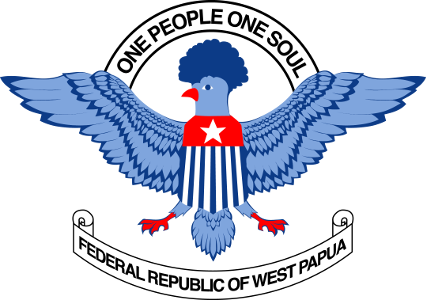
Department of Foreign Affairs Immigration and Trade
WP leader questions Australian support of revisionist Indonesia
 DFAIT
Posted in Australian Politics, Events, International Relations, Open Days, West Papuan Government
DFAIT
Posted in Australian Politics, Events, International Relations, Open Days, West Papuan Government
West Papua Summit, Port Vila, Vanuatu, 16 Nov-1 Dec 2007
DFAIT
Posted in Churches, Culture, Documentaries, Events, International Relations, West Papuan Government
This photo-essay (30 slides) is of a two-week summit in Vanuatu that culminated with a ground-breaking ‘Unity Day Port Vila Vanuatu Declaration’ signed by the Maraki Vanuariki Council of Chiefs, the Port Vila Council of Chiefs, and the West Papua National Authority on 29 November 2007. The declaration differed from previous iterations between the two peoples in that it was organised by influential Vanuatu chiefs, not elected politicians, and by the West Papua National Authority with its own history of political struggle (as distinct from human or cultural rights). The declaration set the long-term agenda for foreign support of the West Papuan struggle, because it rendered the Vanuatu Government responsible for sponsoring West Papua onto the UN Decolonisation List, for listing West Papua with the Melanesian Spearhead Group, Pacific Islands Forum and the Africa Caribbean Pacific Group, and for hosting a peace conference between Indonesia and the West Papua National Authority.
Vanishing Tribes: Unheard Voices from West Papua
VANISHING TRIBES: UNHEARD VOICES FROM WEST PAPUA is an interactive, illustrated, EBook that tells a fictional story based on real events in West Papua. It is a tribute to the Melanesian people of this island nation and their unstoppable determination to be free of a corrupt and brittle state. The main character is Vivi, a Papuan teenager, who wants to join her brother in the fight for survival against the modern Indonesian Republic. The authors, illustrators, and technicians of this EBook are sophisticated political activists, and their production is informative, colourful, logical, artistic, accessible, and FREE. Students (and their teachers) will find the EBook's own WIKI helpful in understanding why Papua's indigenous people are steeped in misery as involuntary Indonesian citizens. Their story is a modern history of realpolitik, militarism, self-determination theory v practice, and even how not to be a good neighbor.
(http://www.vanishingtribes.net/vtribes-web-browser.html)
Launch, West Papua Office in Docklands, 23 June 2014
A gallery of informative photographs with comprehensive captions by Tommy Latupeirissa and David Wainggai of the launch of the FRWP Department of Foreign Affairs, Immigration, and Trade at 838 Collins Street in Docklands (Melbourne) on 23rd June 2014.
Letter from President Yaboisembut to President Obama, Nov 2012
This letter explains Mr. Forkorus' request to President Barrack Obama to assist in negotiating peace and justice between the Federal Republic of West Papua and the Republic of Indonesia.
Letter from President Yaboisembut to MSG, 7 Jun 2013
Letter from President of the Federal Republic of West Papua, Forkorus Yaboisembut to Chair of MSG, Mr Victor Tutugoro, dated 7 Jun 2013, from inside the Abepura Prison, Jayapura, West Papua
Prime Minister Edison Waromi, Note from Abepura Prison, 2013
A note from FRWP Prime Minister, Edison Waromi, from Abepura Prison in West Papua, calling for a unity among West Papuans and to join hands together to have a coordinative resolution agenda to bring the people of West Papua to enjoy a peaceful, free and full sovereignty.
FRWP Executives to be Released from Prison
DFAIT
Posted in Australian Politics, DFAIT Briefers, Human Rights, International Relations, West Papuan Government
The Indonesian government has claimed it is releasing the President and Prime Minister of the Federal Republic of West Papua (FRWP) on Monday 21 July 2014. President Forkorus Yaboisembut and Prime Minister Edison Waromi were convicted of treason, along with Selfius Bobbi, Agus Karar, and Domiinikus Sorabut, after the 3rd Papua Congress established the independent state of West Papua on 19 October 2011.
3rd Papuan National Congress, Declaration
On 19 October, Prokorus [normally spelt Forkorus] Yaboisembut was elected President
of West Papua, and the evangelist Edison G. Waromi was elected Prime Minister.
Following the elections, Prokorus Yaboisembut read out the Declaration of a new
state—the Federal State of West Papua, the symbol of the state—the Mambruk Bird, the
currency—the guilder, the national anthem—Hai Tanahku Papua, the national
languages—Pidgin, Indonesian Malay, Papuan languages, and English, and the
geographic territory.
The Declaration stated: “On this day, 19 October 2011, we proclaim the full
independence and sovereignty of our state, and therefore the State of Indonesia must
speedily end its occupation of Papua. All components of the leadership elected at the
Third Papuan People's Congress shall immediately discuss the basic principles of the
State of West Papua”.
Anglican priest returns from war-zone
Peter Woods, Anglican priest and regular visitor to West Papua, said he was appalled by the militarism and the grinding poverty that he found in Manokwari last week, eighteen months after his last visit.
Drs Jacob Rumbiak, Speech, Opening, FRWP Dept Foreign Affairs, Immigration & Trade, Docklands, 23 June 2014
Drs Jacob Rumbiak, Speech, Opening of the FRWP Dept of Foreign Affairs, Immigration & Trade, 23 June 2014
Briefing Paper for UN Secretary General Ban Ki-Moon
This paper was developed by the West Papua National Authority, in consultation with the OPM, the Papua Presidium Council, tribal leaders, Church leaders, NGO’s, women leaders and student organization. It addresses common misunderstandings about the West Papuan liberation struggle, and answers questions commonly posed by journalists, diplomats, and politicians about an issue usually considered in terms of political sovereignty and human rights, but which has become central to the security and defence of countries in the Asia-Pacific region.
West Papua’s Right to Self-Determination
In this five-thousand word paper for the 2001 Festival of Ideas in Adelaide, Jacob Rumbiak examines three international agreements and three Indonesian regulations, via which over-rode Dutch-funded self-determination policies and projects, and the West Papuans right to be consulted, and independence, were consciously ignored.
West Papua Independence Policies; Tensions in the Transition
DFAIT
Posted in DFAIT Briefers, International Relations, Law, United Nations, West Papuan Government
This paper sets out the infrastructural priorities adopted by the West Papua National Authority (WPNA) in the transition from Special Autonomy (2001—2010) to an independent nation-state on the western border of Melanesia Pacific. Published February 2011
Federal Republic of West Papua opens office in Docklands
Councilor Amanda Stone from the Yarra City Council is cutting the ribbon on the Federal Republic of West Papua’s new office in Docklands (Melbourne) on Monday 23 June 2014. This is despite the Lombok Treaty, signed by Australia and Indonesia in 2006, which outlaws any demonstration of the Indonesian colony’s independence.
Melanesian Spearhead Group briefing May 2013
Outlining the institutions, strategies, political priorities and social objectives of the Federal Republic of West Papua before the meeting of the MSG secretariat meeting in Kanaky.

- Live Blog: 2023 December 1 West Papua Independence Day protests and commemorations
- Indonesian Police arrest 4, beat & shoot rubber bullets to disperse Mako Tabuni’s assassination commemoration in Jayapura
- HRD Analysis on Oksibil-West Papua Armed Conflict
- HRD Report: Information on Internally Displaced People in West Papua – Oksibil
- Extension of Special Autonomy Law Number 21 of 2001 for West Papua by Indonesian Parliament: A One-sided Policy implementation
- Permintaan mendesak kepada saksi garis depan dan sumber dari WestPapuaMedia untuk memaksimalkan liputan internasional tentang Darurat Kemanusiaan di Ilaga, Intan Jaya dan Nduga
- Families of TNI victims in Ilaga, Puncak call on Indonesia to stop killing them in open video plea