
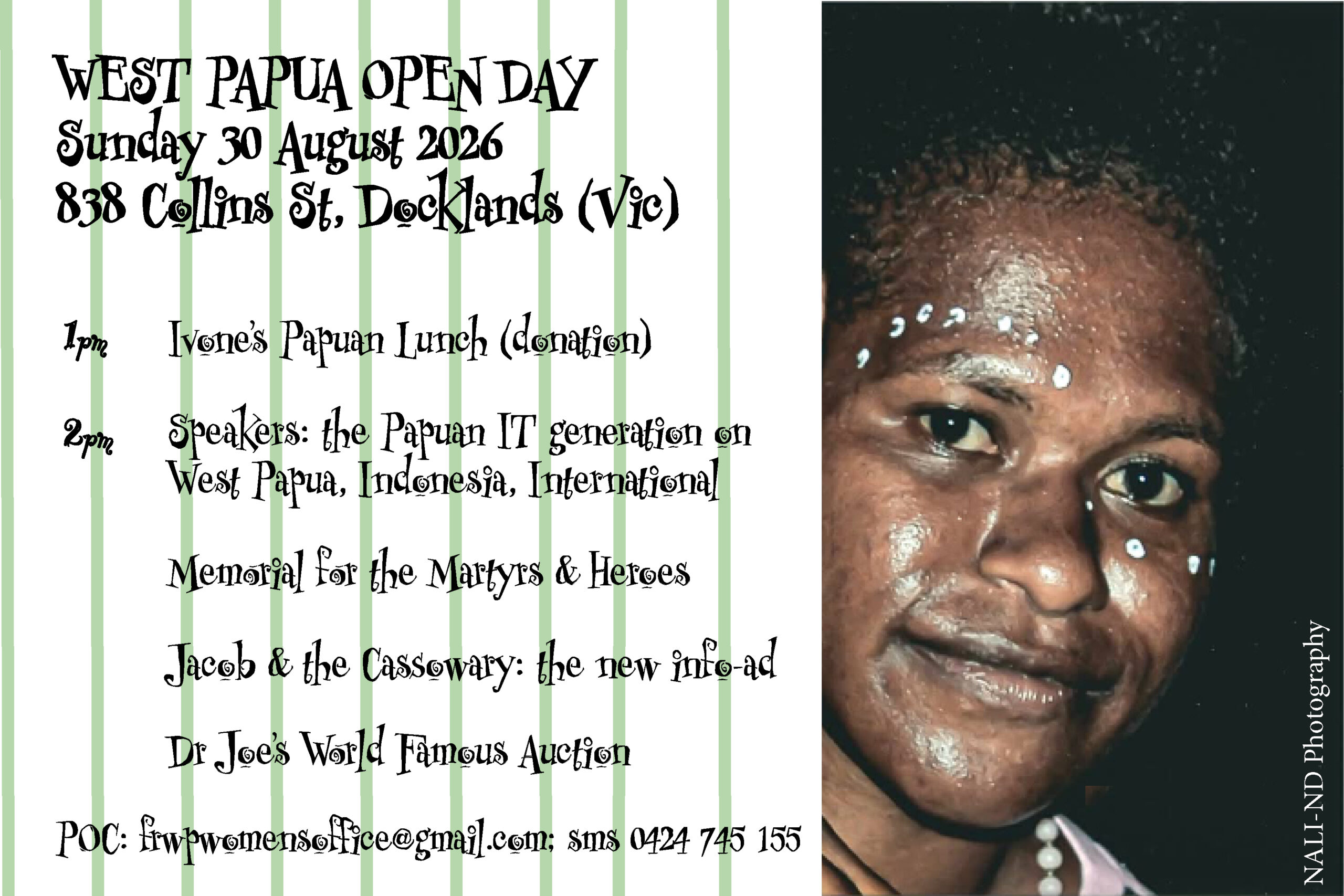
Our Open Days are a mini festival of ideas, knowledge, and information, spiced with a bit of excellent food and acoustic music, so why not spend a couple of hours on a sunny Sunday tracking West Papua’s liberation and all that it entails.
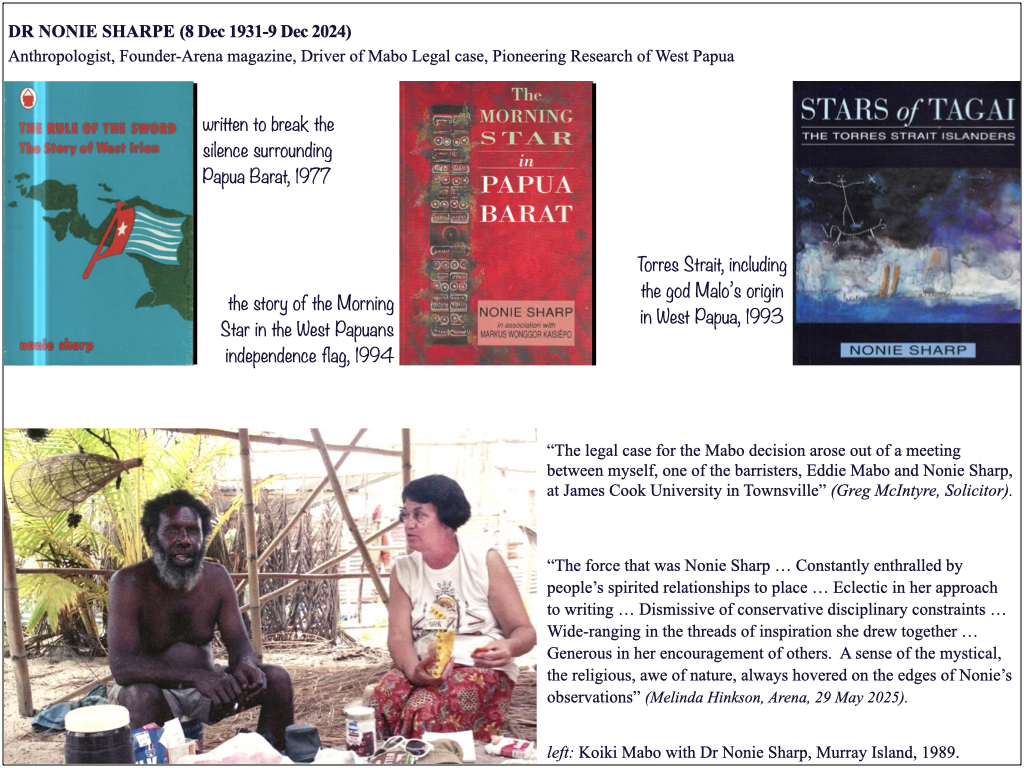
After our Papuan-Chef’s lunch, MC MAEVE CLANCY introduces two young West Papuans who show what is going on in West Papua now, how the Indonesian State and the Indonesian people are responding differently, and what international actors, like Australia, are doing to free the Indigenous people of their colonial overlord. Our Memorial for the Martyrs and Heroes honours three West Papuan women recently shot by the Indonesian Military: an elderly woman, a pregnant wife, and a high-school graduate panning for gold to pay for her university studies. The Open Day wraps with Dr Joe’s Auction of glorious artefacts which keep the doors of our office swinging wide open. MC for the day is Maeve Clancy, the grand-daughter of Dr Nonie Sharp who wrote two ground-breaking books on West Papua in 1977 and 1994 (see slide at end of post).
ACKNOWLEDGEMENT OF COUNTRY
MAEVE CLANCY: “We acknowledge the Aboriginal and Torres Strait Islanders who own this wonderful land, especially the Aboriginals of the Kulin Nations. In tribute we replay Uncle Herb Patten’s rendition of ‘Imagine’ on a gumleaf, which he played to open one of our zoom meetings during COVID, way back in 2021. https://www.youtube.com/watch?v=MPFNqejJ1Zw
SPEAKER: Willem Walilo
Willem Walilo is a modern Hubula tribeman and an outstanding spokesperson for ‘the people of the Baliem Valley’ in the Central Highlands, where the freedom-fighters have been fighting Indonesia’s brutal attempts to bulldoze Papuans from their land around the Wabu Blok Gold Reserve. Historically, you might recall that the Highlanders’ farming and irrigation techniques date back to the end of the last ice cycle (6-10 thousand years ago) when glacial ice-melt flooded a low-lying plain and formed Torres Strait (and also Bass Strait). During this current period of climate change and crisis, Willem is studying at RMIT University in Melbourne.
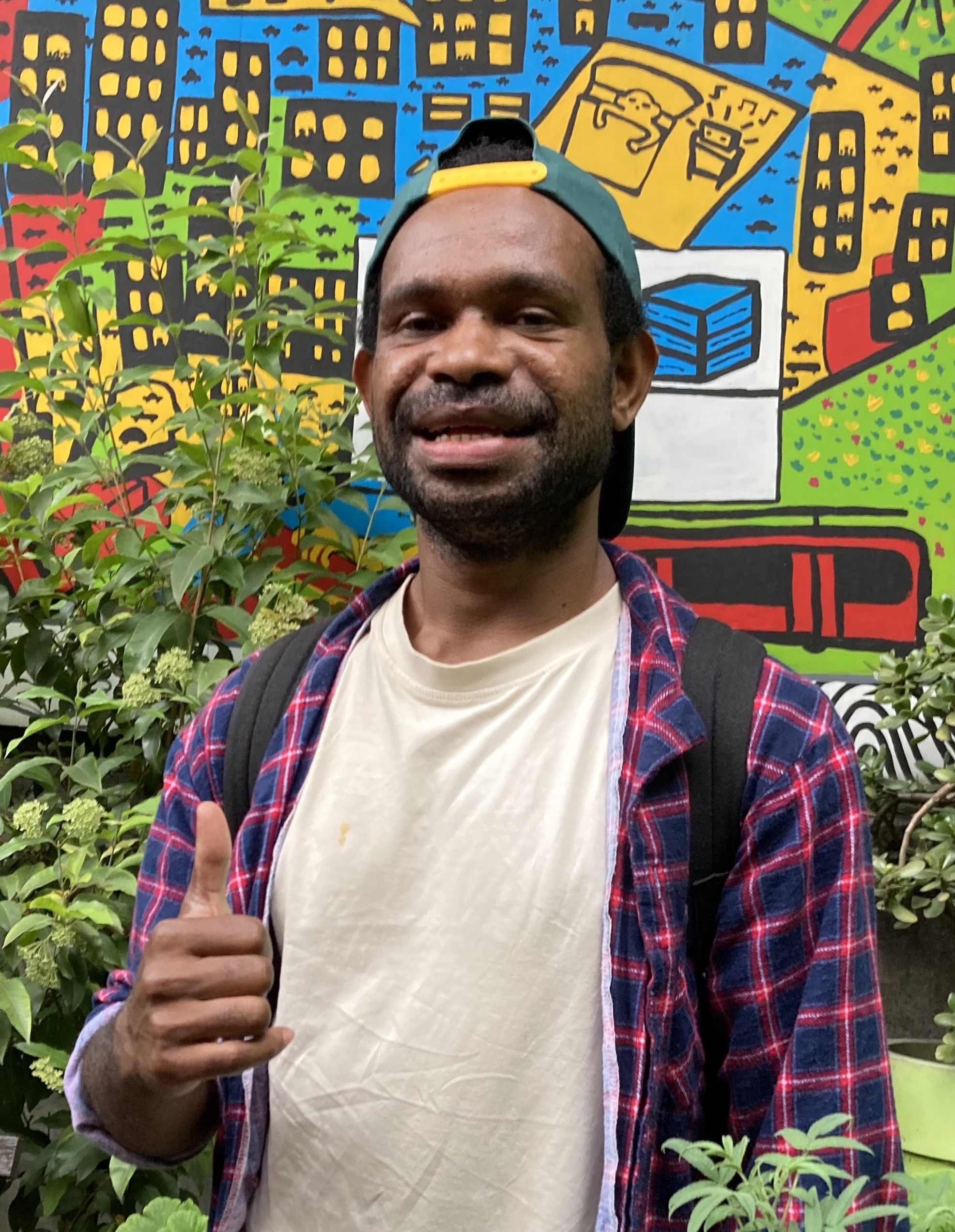
Willem Walilo, 3CR courtyard, 11 March 2026
Willem Walilo’s presentation, 30 August 2026
Introduction: “Wa, Wa, Wa, Womindeka, Thank you Maeve, and thank you all for coming today. Today I focus on Indonesia’s application of International Law to colonise West Papua, and our application of international law to take back our homeland.”
Presentation (5 slides, text and images) Willem, Presentation, Open Day, 30 August 2026
In conclusion I quote from President Wenda. “You will always have that moment, when you can choose to keep moving forward, or give up. They will try to put out your fire. They will try to kill your spirit, and break your will. But when you are fighting for a dream that is bigger than yourself, your family, your business, you are fighting for the truth, or for God. That fire must never die. If you give up, that dream dies forever. The only way that dream can still become a reality is if you never give up.No matter what happens, don’t let your fire go out. Keep moving forward.”
Willem Walilo, 3CR Radical Australia, 11 Mar 2026 (60 mins)
https://www.3cr.org.au/radicalaustralia/episode/william-walilo
SPEAKER: Aprilia Seseray
Aprilia’s traditional home is Meukisi village in Tanahmera Bay (from where, in April 1944, the Australian destroyer ‘Arunta’ led the Allies’ bombing campaign against the Japanese). Her grandfather, Zacharias Seseray, worked for the Dutch Administration until the United Nations transferred the administration to Indonesia (New York Agreement 1962). Indonesian soldiers then tortured her grandfather and torched the family home; indeed publicly bonfired anything with a Dutch connection, except of course the white goods they coveted (fridges, radios, washing machines) which they immediately stole and shipped home to Java. Aprilia graduated from Monash University with a Bachelor of Business and Accounting, and a Masters in Accounting.
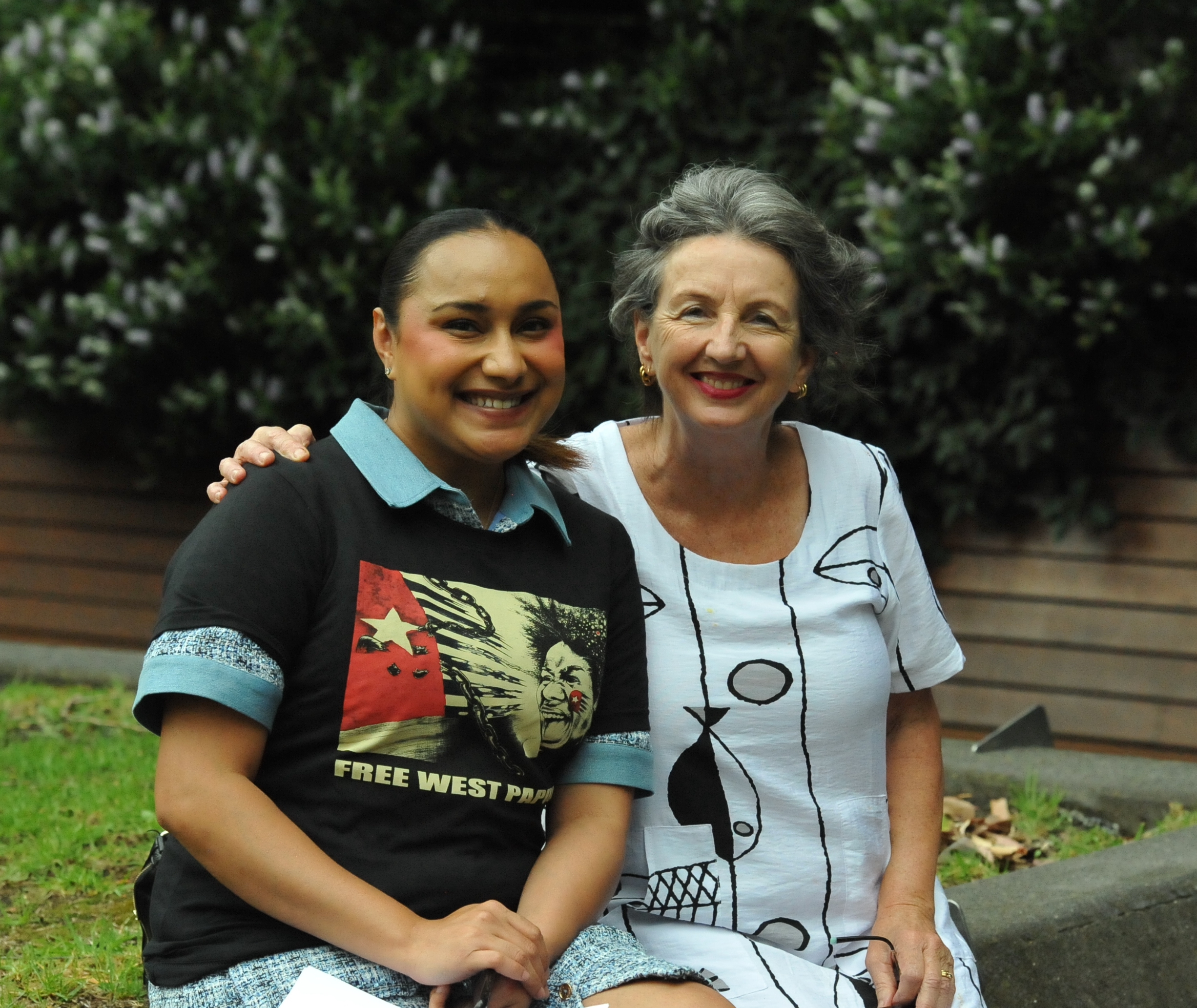
Aprilia Seseray, with Deidre Giblin, a long-standing member of the WP Rent Collective, In the garden at 838 Collins Street, Docklands, 24 November 2024
Aprilia’s presentation, 30 August 2026
MEMORIAL FOR OUR MARTYRS AND HEROES
Our memorial remembers three women murdered in the Highlands by the Indonesian Military between March and July 2026 as part of its brutal attempt to forge space around the new Wabu Blok gold reserve (35 kms from the Freeport mine with an estimated worth of $us33.2 billion). The Memorial is led by Ribka Ovide, an Aeronautical Engineering student at RMIT University. Ribka was brought up in Timika, but her tribal homeland is Depapre (another coastal village in Tanahmera Bay on the north coast that was bombed by the Allies in 1944). Gipson Suu from Nalca, a tiny village in the Central Highlands, and his friend Oisin, a music student at Melbourne University, create a moving soundscape on the sten bass and guitar.
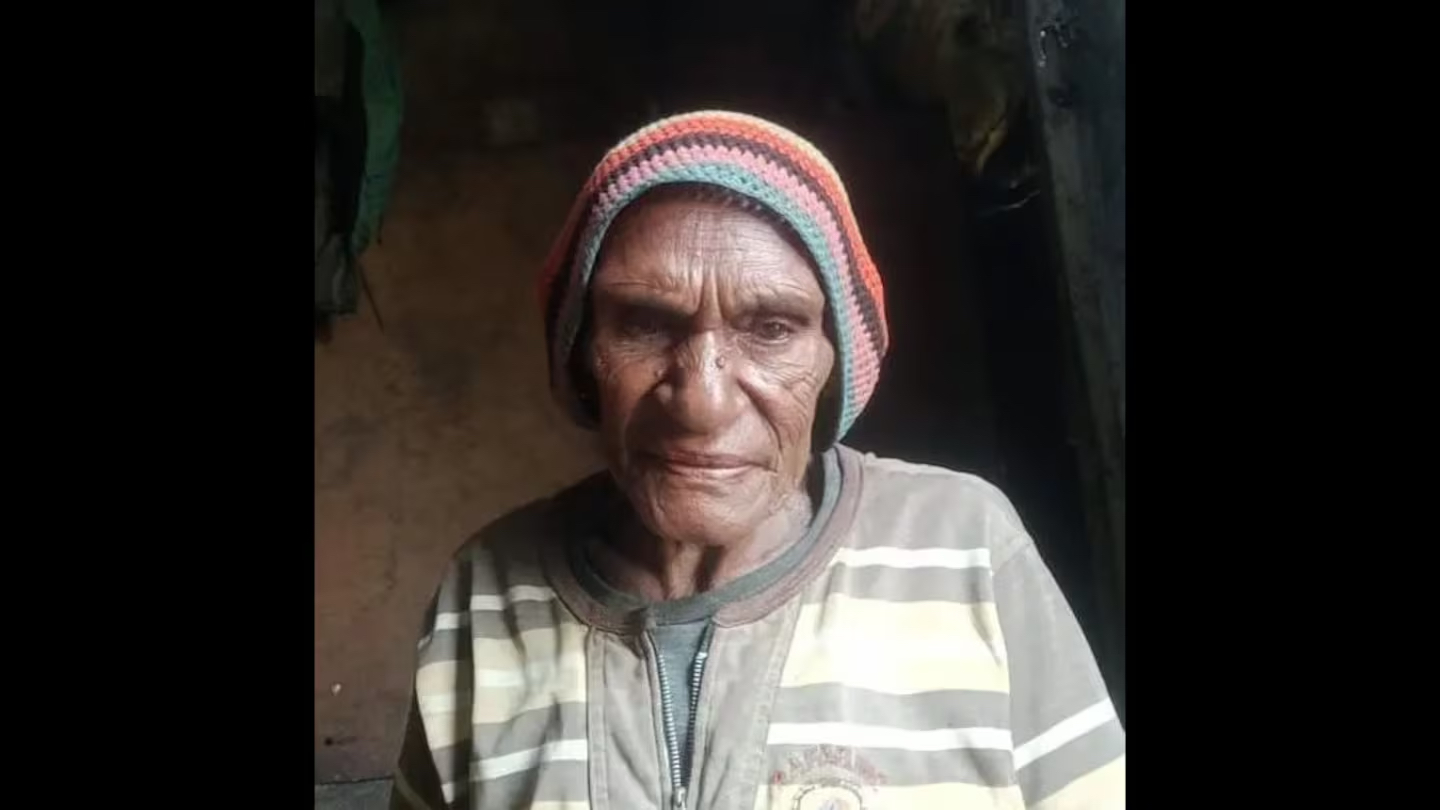
YULITA PIGAI, a 71yo Mee woman from Ikebo Village west of Lake Paniai, shot inside her home by BRIMOB, the elite paramilitary of the Indonesian Police. Yulita was one of six civilians, including a child shot in the chest, murdered in their villages between 31 March and 2 April 2026.
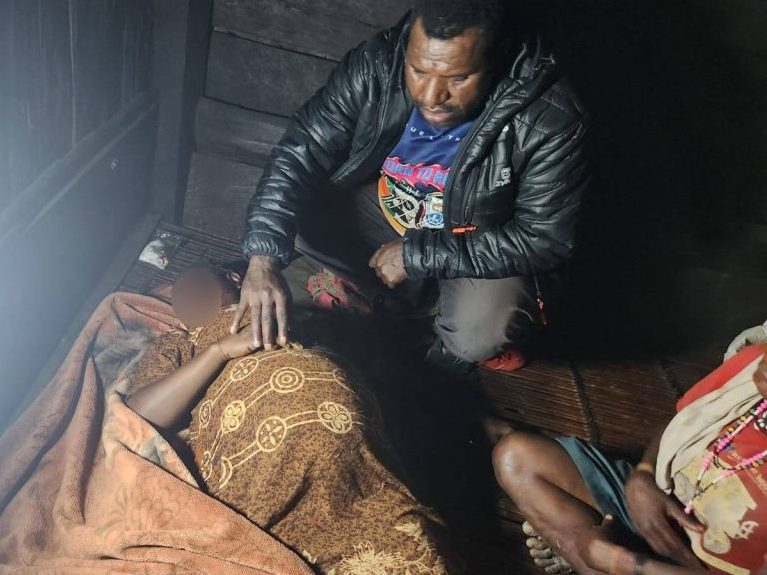
MELKIANA DUWITAU AND HER UNBORN BABY. Melkiana was a 31yo pregnant Moni woman from Wandoga Village east of Lake Paniai. On 2 July 2026, she and her unborn baby were killed in her parents’ home by bullets fired from an Indonesian Army Post on a hill 250 metres away.
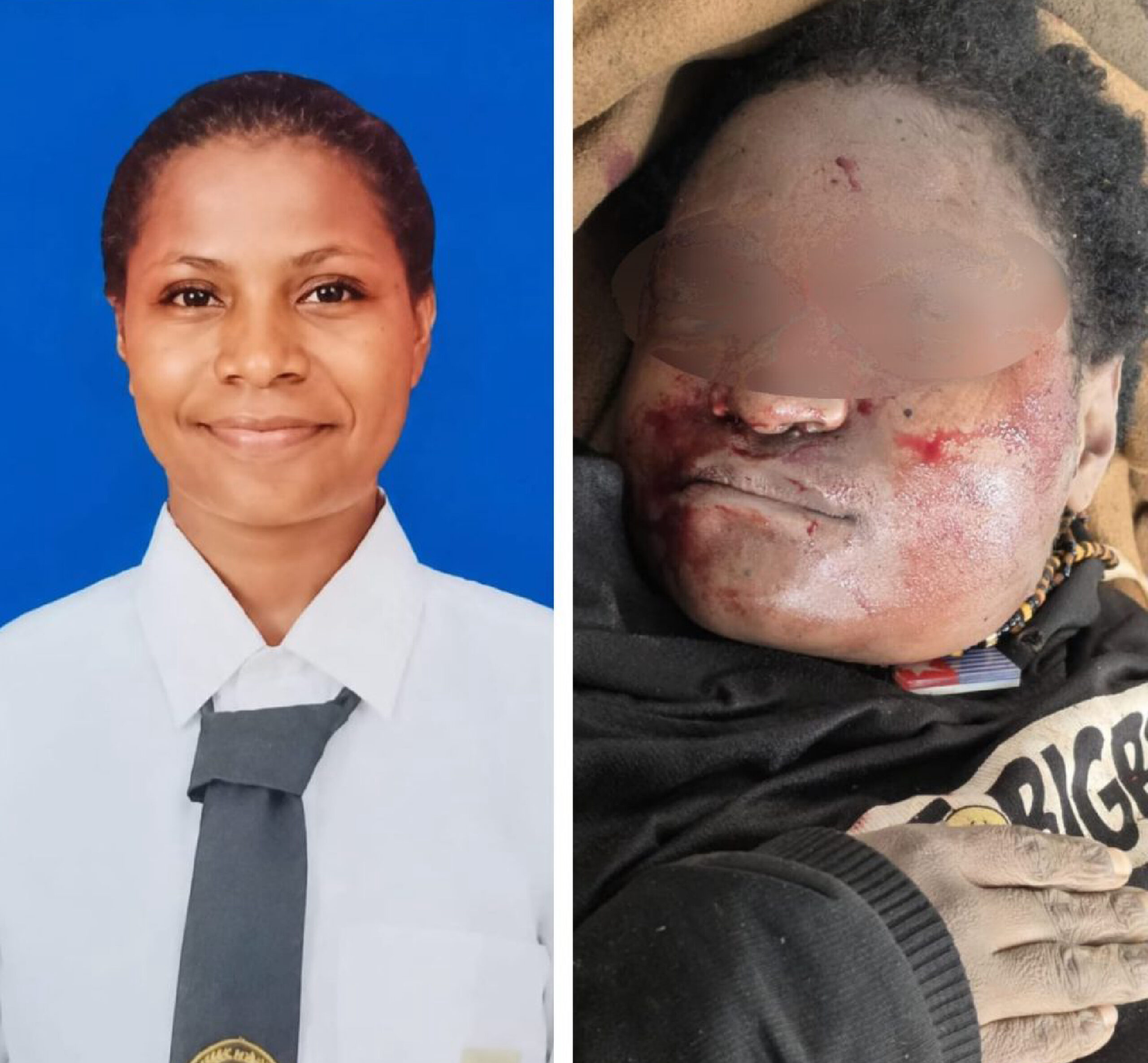
MALINCE WAMANG, the 17yo daughter of Amungme pastor Rev. Anton Wamang, shot on 7 May 2026 by Rajawali Habema Task Force. The school graduate was murdered as she and her mother were having coffee in the Panners Camp after sifting through Freeport’s toxic tailings in the Kabur River looking for gold. (The Kabur empties into the Aikwa River which empties into the Arafura Sea). Four other Papuans were also shot, and six more wounded, including a child.
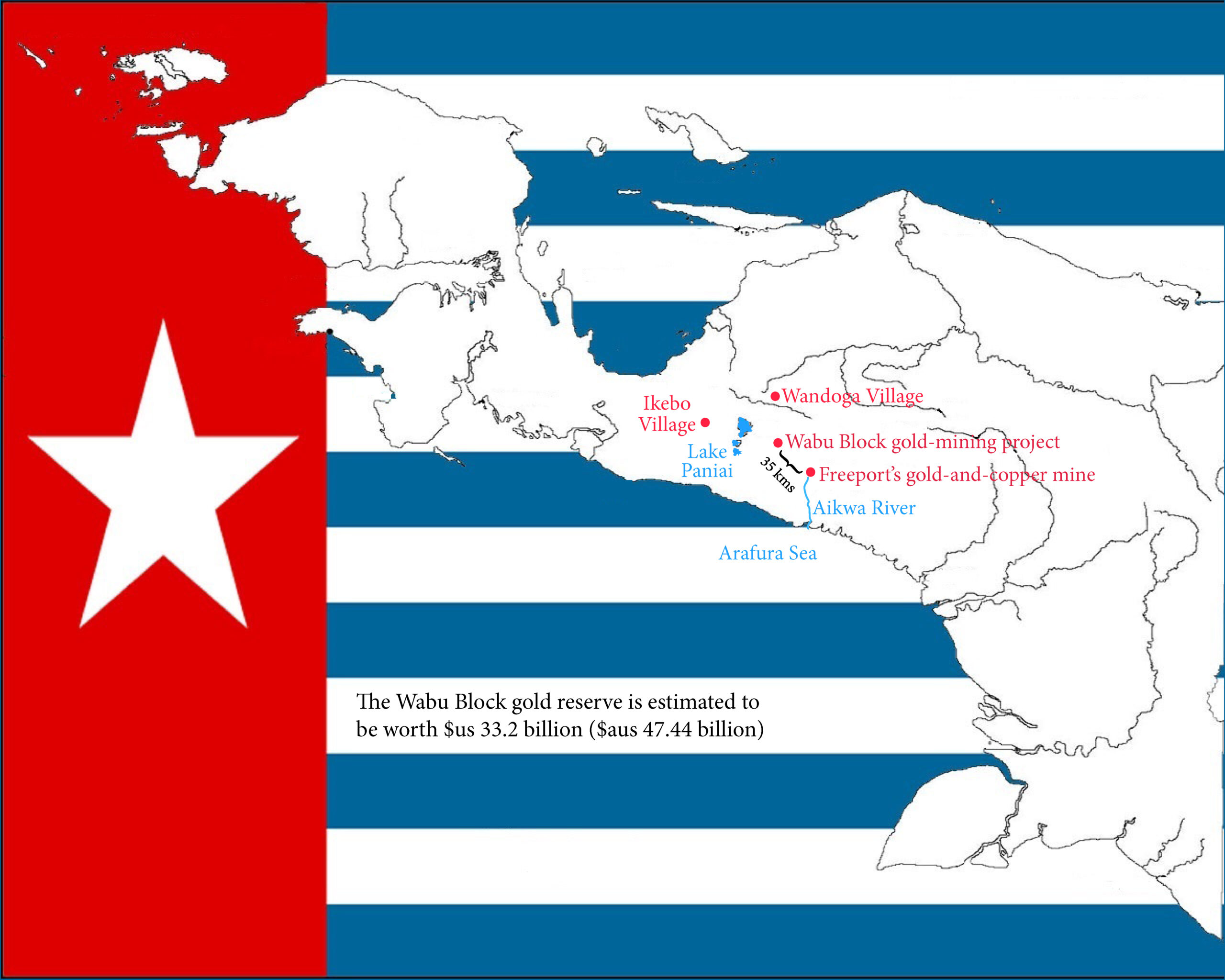
Map showing the villages where Yulita, Melkiana, and Malince were killed.
DR JOE’S AUCTION FOR WP RENT COLLECTIVE
i) Amungme Gold Coffee Beans (250gms), 100% organic coffee grown and processed by a co-operative of Indigenous Amungme farmers in the high mountain valleys of West Papua (1,400 to 2,500 meters above sea level). Cultivated traditionally alongside food crops with natural compost and nitrogen-fixing trees (no chemical fertilizers or pesticides) that produces a full-bodied very bold cup of coffee. Dr Joe’s Auction is a rare opportunity to have and to hold these beans as production is limited, and distribution is limited to the Amungme Gold Coffee House in Timika (the port town south of the Freeport gold-and-copper mine). Our office anticipates it will probably be quite some time before we are able to acquire any more Amungme Gold coffee beans.
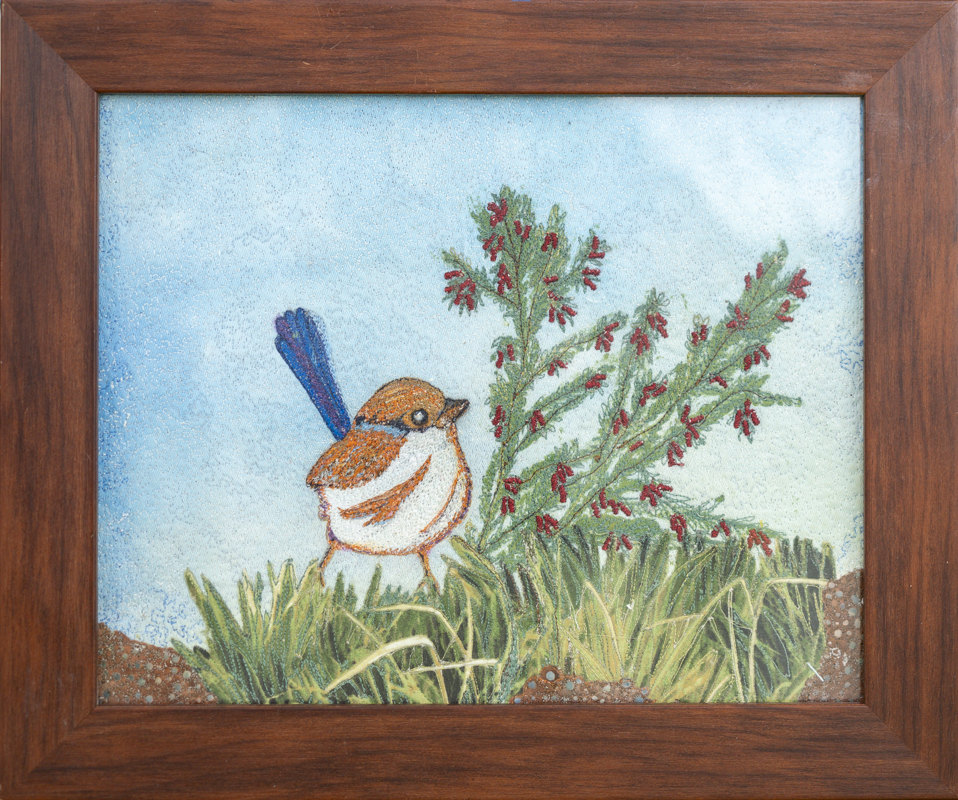
ii) Lois Munro’s beautiful textile of the Superb Fairy Wren who fills her garden on sunny mornings with its short soft tweets and rapid musical trills. Lovingly stitched with gold-thread on cotton and silk by celebrated textile artist and designer Lois Munro, and set in a beautiful wooden frame.
iii) For the past few years we have been working with Congo Elder Clovis Mwamba, trying to galvanise Australians to take a more active interest in the history, colonisation, and so-called decolonisation of the Democratic Republic of Congo. In recognition of our friendship, we presented Clovis with a serving of spoons honed from sweet-smelling Mahogany trees illegally logged in the Ituri Forest in the Democratic Republic of Congo, then smuggled across a couple of land borders and shipped to a port in Italy where the containers were re-branded and on-shipped to Melbourne. How do we know all this? A member of the WP Rent Collective working on the dock heard the story. He quietly removed some of the wood from the container, passed it to Dr Toscano, who then passed it to Master Carver David McKenzie. 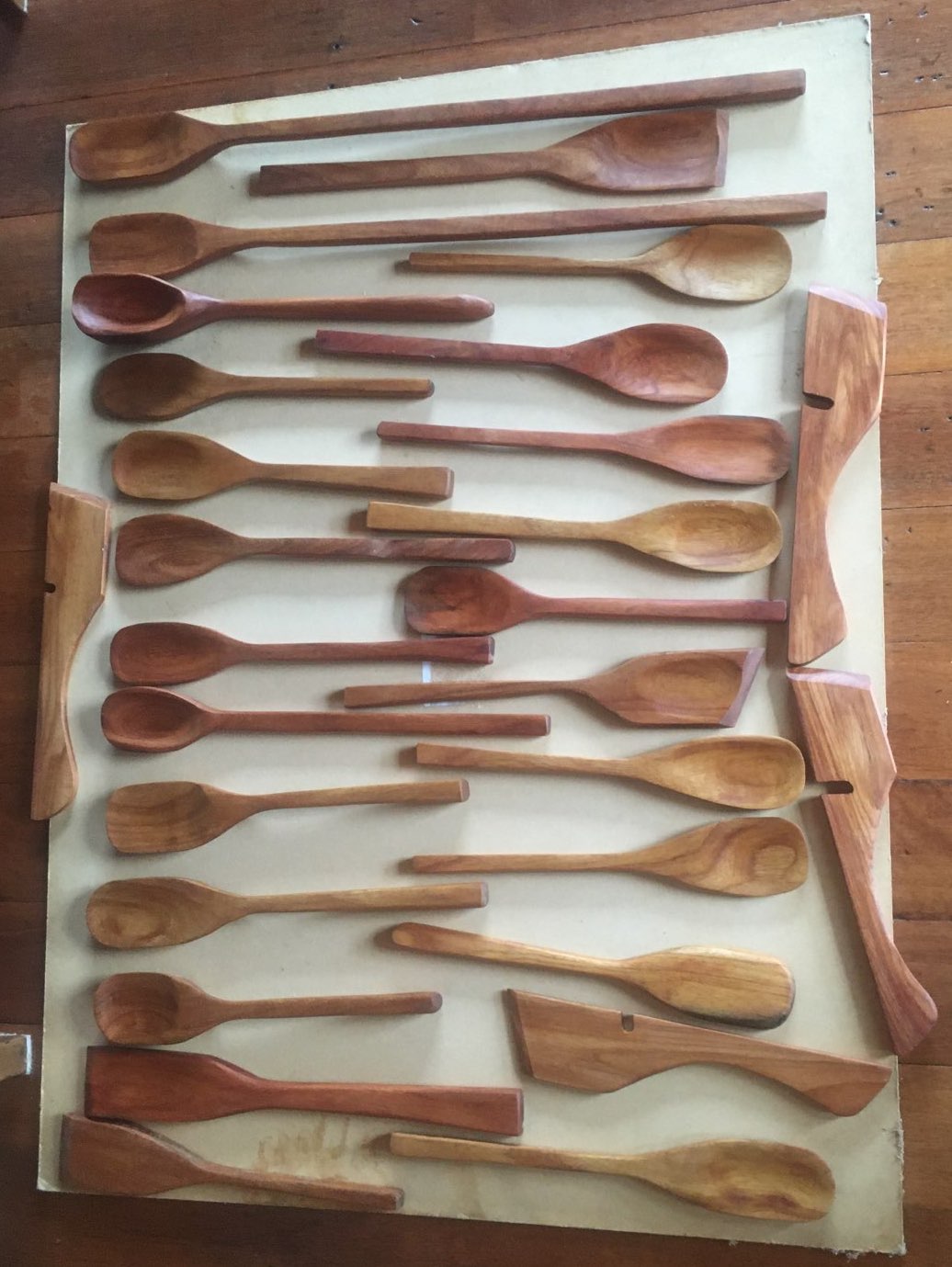
About Clovis Mwamba and the Democratic Republic Congo
Clovis Mwamba’s Biography, at Clovis Mwamba, Biography
Launch of Clovis Mwamba’s book of essays and prison poems at https://dfait.federalrepublicofwestpapua.net/document/launching-clovis-mwambas-the-meteorite-memos/
The Meteorite Memos by Clovis Mwamba (PDF, 155 pages, colour) at
THE METEORITE MEMOS by Clovis Mwamba
Clovis Mwamba reading two poems from The Meteorite Memos (13-min video) at
https://youtu.be/9q75j3MEWCg
Clovis Mwamba, ‘Dag Hammarskjöld, Hero of peace in the Congo’ (15 min video), at https://youtu.be/kMxRv32ks74; PDF Clovis Mwamba’s speech, 17 September 2020
Allen Dulles! What the evil bastard did to Congo & West Papua (Timothy Mathieson, 6-min video) at https://www.youtube.com/watch?v=EDWBmHNrCiM.
Until recently it was not widely accepted that Allen Dulles, CIA Director (1953-1961), was a primary architect of the scarification of decolonisation in the Congo and in West Papua. He organised the murder of Congo’s first prime minister Patrice Lumumba in January 1961, and the assassination of UN Secretary-General Dag Hammarskjöld nine months later, three days before the 1961 General Assembly where the Sec-General planned to present a Decolonisation Program for West Papua.
The Disturbing Reality of Cobalt Mining for Rechargeable Batteries (14-min interview with Siddarth Kara) at www.youtube.com/watch?v=CIWvk3gJ_7E
Patience and longing, the gift and the burden of the exile (Daniel Flitton, Sydney Morning Herald, 5 January 2010) https://www.smh.com.au/national/patience-and-longing-the-gift-and-the-burden-of-the-exile-20100104-lq66.html
Blood River: a journey through Africa’s broken heart by Tim Butcher (2007). “Butcher had not only the courage, but the insight to tell a great story of a country struggling to emerge from a history of colonial rule,: He was praised for his “great knowledge of the country’s history, his ability to convey scenes and characters in crisp prose, and his interpretation of the complex situation of the Congo today.” (Getaway, 17 April 2012. Getaway is a South African magazine).
Dr Nonie Sharp