
Department of Foreign Affairs Immigration and Trade

Dag Hammarskjöld, West Papua, and the United Nations
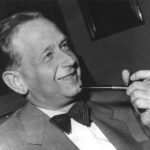
Since the 2015 publication of Greg Poulgrain's 'The Incubus of Intervention: conflicting Indonesia strategies of John F. Kennedy and Allen Dulles' we have known that UN Sec-General Dag Hammarskjöld was about to introduce a Decolonisation Program in Netherlands New Guinea whereby the West Papuan people would be recognised as the sovereign owners of their land, and UN officers would assist an independent West Papuan government for five years. Hammarskjöld intended to present the program to the 1961 General Assembly. His assassination three days before the Assembly meant the motion was debated without his authoritative and influential presence, and didn't garner two-thirds majority support. The UN’s failure to adopt a policy of self-determination for West Papua opened the way for an American diplomat—appointed by Acting Sec-General U Thant—to mediate an agreement that facilitated Indonesia’s incorporation of West Papua.
West Papua 1942-2022: the legals, politics, and only way forward
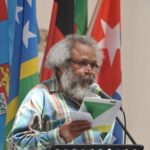
'West Papua 1942-2022: the legals, politics, and the only way forward' by Jacob Rumbiak by Jacob Rumbiak is a 50-page fully referenced image-and-text study guide of the West Papuans’ experience of World War II, and as a progressive UN Non-Self-Governing Territory during the 1950s; Of UN Secretary-General Hammarskjöld's assassination and the UN's subsequent failure to uphold the West Papuan's self-determination project; Of Indonesia's belligerence and the nefarious behaviour of CIA Director Allen Dulles in taking over the Papuans' homeland. It includes legal commentary on the New York Agreement (1962—69) and a detailed rebuttal of the claims Indonesia used to justify its colonisation of the Papuans’ richly resourced territory. The final section outlines West Papuans’ most recent resistance and nation-making, including raising a transitional government and being listed on the UN Decolonisation Agenda (what Dag Hammarskjöld wanted to do in the 1961 UN General Assembly).
Two important legal documents: West Papua: real-politik v international law; & Papua’s right to self-determination under international law

The legal papers in this post set out the principles of International Law relating to the New York Agreement (1962-1969) by which Indonesia, the Netherlands, and the United Nations, all pursued by the United States of America, aborted the decolonisation project of the Non-Self-Governing of Netherlands New Guinea, via UNGA Res. 1752 (XVII) in 1962 and UN Res. 2504 (XXIV). UN Res.2504 in 1969, passed unanimously by the UN Member States (84,0) formally "noted" but did not formally reject the result of the "Act of Free Choice" which was not an act of self-determination, but a web of intrigue, bribery, duress by threat, and coercion by propaganda and fraudulent promises in which 1025 carefully selected, indoctrinated and controlled members of West Papua's indigenous population of almost 800,000, under the close scrutiny of armed Indonesian security personnel, agreed unanimously to commit their peoples to integration of their homeland with the State of Indonesia.
Longing for Freedom, by West Papuan activist Herman Wainggai

Why do I reflect on my personal journey and write this? Because this has been the reality of the lives of the Papuan people under the Indonesian military system since the 1st of May, 1963 and since the so called Act of Free Choice in 1969 when West Papua through military and political pressure was unjustly integrated into Indonesia. We [West Papuans] have maintained our dignity in the face of oppression, insult and prejudice. So many of our people have suffered and died, and they will continue to suffer and die under the military regime of Indonesia. This is why we cannot stop our struggle for justice and freedom.
Briefing Paper for UN Secretary General Ban Ki-Moon
This paper was developed by the West Papua National Authority, in consultation with the OPM, the Papua Presidium Council, tribal leaders, Church leaders, NGO’s, women leaders and student organization. It addresses common misunderstandings about the West Papuan liberation struggle, and answers questions commonly posed by journalists, diplomats, and politicians about an issue usually considered in terms of political sovereignty and human rights, but which has become central to the security and defence of countries in the Asia-Pacific region.
Melanesian Spearhead Group briefing May 2013
Outlining the institutions, strategies, political priorities and social objectives of the Federal Republic of West Papua before the meeting of the MSG secretariat meeting in Kanaky.
Solving West Papua’s political problem by peaceful means, 2005
'Solving the Political problem of West Papua by Peaceful means' (5,000 word essay) was prepared by Jacob Rumbiak for the Act of Free Choice Seminar on 15 November 2005 at the Institute for Dutch History in the Royal Library in The Hague. Jacob was then Senior Research Associate as 'a leading scholar on Indonesia and West Papua' at the Globalism Institute, RMIT University in Melbourne, and attended the seminar with another West Papuan leader Benny Wenda who also lives in exile (in Oxford, England). The paper explores the history of Indonesia's occupation of West Papua, including the laws created for Indonesia's 'legal' annexation, and the effect of Indonesia's massacre in 1965-66 of 1-2 million of its own citizens in Java, Sumatra and Bali on the (so-called) vote for integration in West Papua in 1968-1969. (There has never been a referendum in West Papua). The essay is notable for the number of Indonesian sources quoted.The post contains the full essay, as well as a downloadable PDF.
Submission to Joint Standing Committee on Foreign Affairs Defence and Trade, 2002
Jacob Rumbiak's “Building a relationship between Australia and Indonesia (that includes West Papua) based on the classic principles of Justice, Peace and Love" was prepared for the Federal Joint Standing Committee's 2002 inquiry of Australia's relationship with the Republic of Indonesia. It consists of well-considered advice from a West Papuan activist who is also an Indonesian-educated academic who escaped from years in prison in 1999. It includes an alarming Papuan Intelligence Service (PIS) report of a meeting between Indonesian President Sukarnoputri, government ministers and military commanders. It discusses fixing government maps to include West Papua as a bona fide nation, giving material aid not financial assistance to Indonesia, education scholarships for West Papuans, and re-consideration of West Papua in terms of security and defence against extremist Islamic organisation. The post contains the 3,400-word essay, and a PDF copy that can be printed/download.
Knowing and understanding how West Papuans were robbed of their independence, April 2000
Paper (6,000 words) by Jacob Rumbiak for 'West Papua at the Crossroads: A conference on the prospects for peace and conflict resolution in West Papua' at the University of Sydney on 19th April 2000. This was the first paper written by Jacob since his escape from jail in Indonesia and flight to Australia, via East Timor (where he was an observer of the referendum) on 7 September 1999. The paper was instrumental in shifting the focus of academic and activists' from the Act of Free Choice in 1969 to the New York Agreement of 1962 (a real politik driven 'peace treaty' that established the infamous 'act-of-no-choice'). The paper was also instrumental in alerting scholars to Indonesia's opportunistic creation and use of election regulations in 1966 (after the coup in Jakarta and the worst massacre in the twentieth century) and political party regulations (PAKET 1-5) drawn up in 1985 to hoodwink the international community into supporting the integration of West Papua into Indonesia.

- Live Blog: 2023 December 1 West Papua Independence Day protests and commemorations
- Indonesian Police arrest 4, beat & shoot rubber bullets to disperse Mako Tabuni’s assassination commemoration in Jayapura
- HRD Analysis on Oksibil-West Papua Armed Conflict
- HRD Report: Information on Internally Displaced People in West Papua – Oksibil
- Extension of Special Autonomy Law Number 21 of 2001 for West Papua by Indonesian Parliament: A One-sided Policy implementation
- Permintaan mendesak kepada saksi garis depan dan sumber dari WestPapuaMedia untuk memaksimalkan liputan internasional tentang Darurat Kemanusiaan di Ilaga, Intan Jaya dan Nduga
- Families of TNI victims in Ilaga, Puncak call on Indonesia to stop killing them in open video plea